
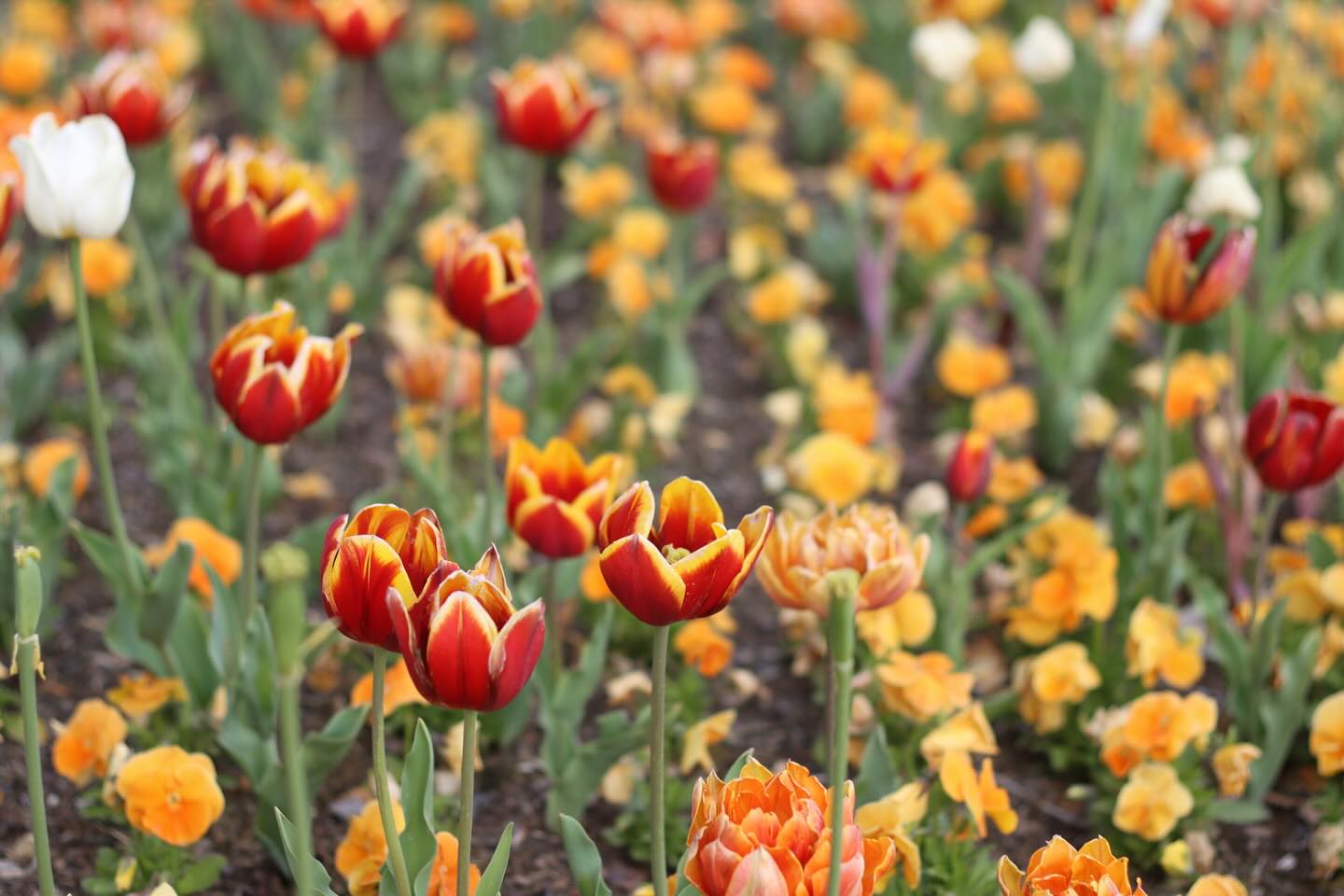
Flowers are one of the most rewarding subjects to photograph. They are colourful, patient and everywhere, from public gardens to your own backyard. Whether you are shooting a tulip festival or a single blossom, a few simple techniques will make your flower photography feel dreamy and professional.
Key takeaways
- Shoot in soft light: overcast days and early mornings are ideal for flowers.
- Use a shallow depth of field to isolate one bloom and blur the background.
- Get low and shoot at flower level for a more immersive perspective.
- Look for backlight to make petals glow.
Go wide first, then close
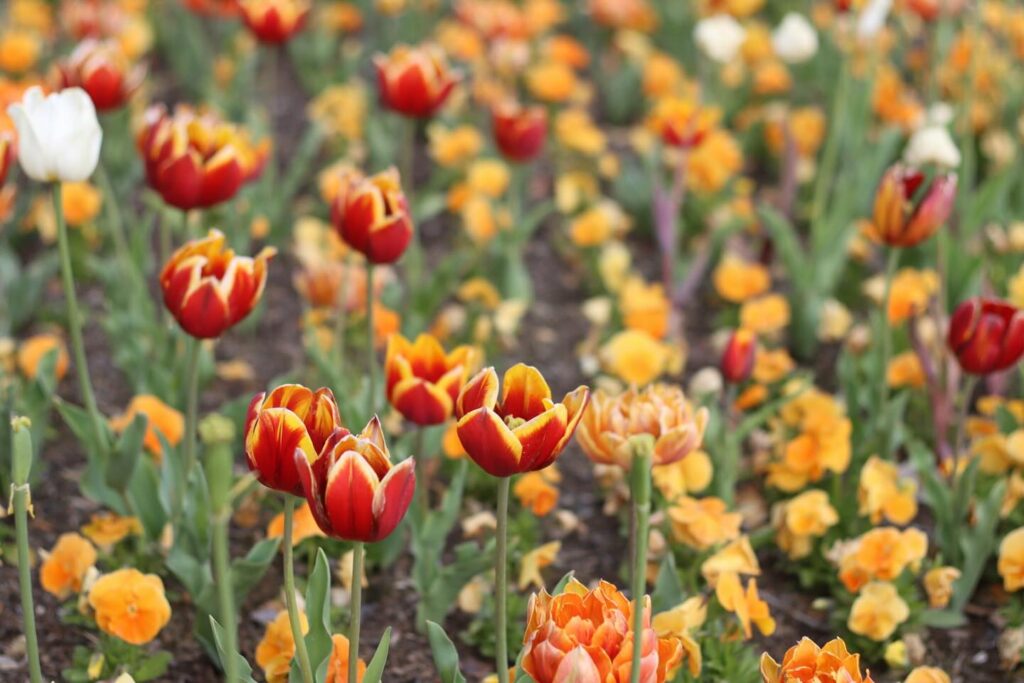
When you arrive at a garden or tulip field, start with a wide view that shows the scale and colour of the place. Rows of flowers make natural leading lines. Then work in closer, from small groups to single blooms, so you come away with a complete story.
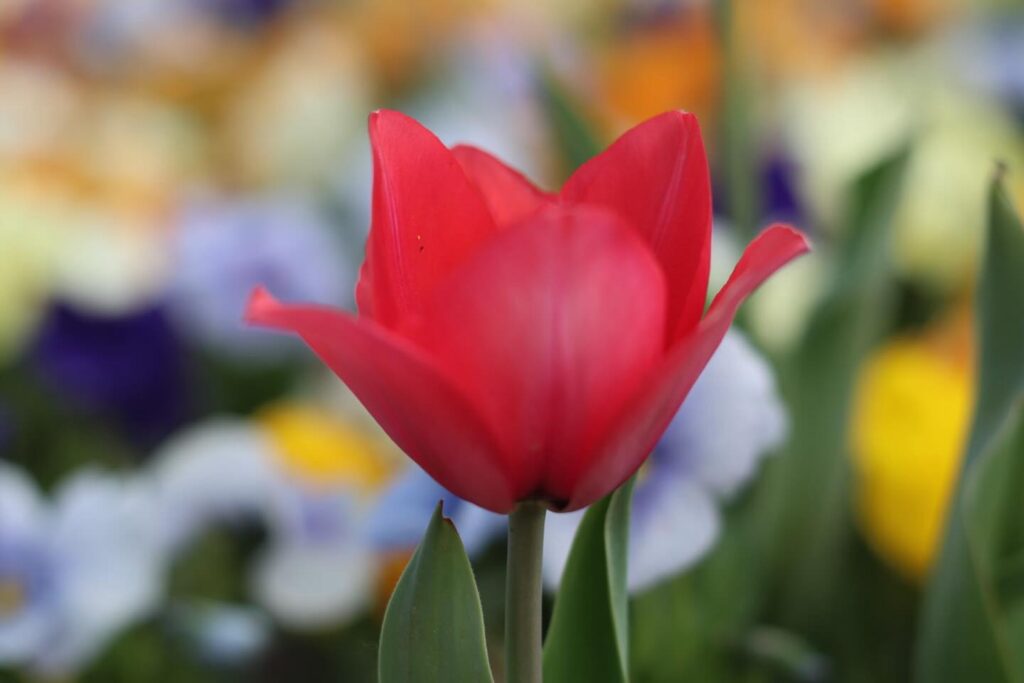
Isolate a single bloom
The classic flower photo is one perfect bloom in sharp focus against a soft, creamy background. Use the widest aperture your lens allows, or portrait mode on a phone, and move closer to your subject. The closer you are and the further away the background is, the softer it becomes.
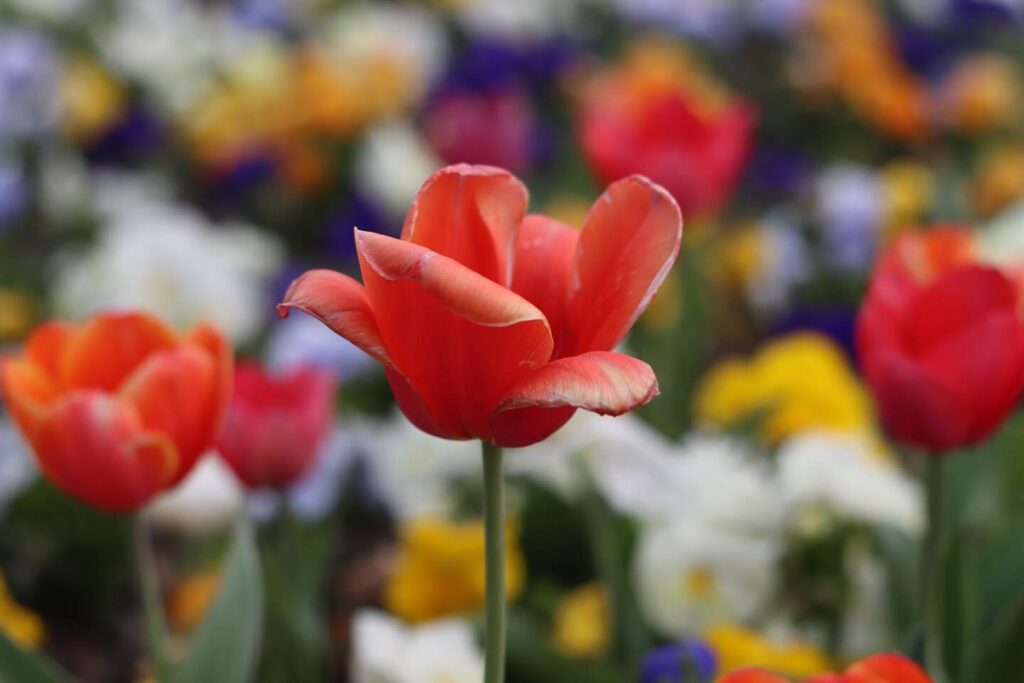
Use colour as a backdrop
A colourful flower bed behind your subject turns into soft washes of colour when blurred. Position yourself so contrasting colours sit behind the main flower, such as a red tulip in front of yellows and pinks. This creates depth and makes the subject pop.
Light and timing
Harsh midday sun creates hard shadows and washes out petals. Overcast days are perfect for flowers because the clouds act as a giant diffuser. Early morning light is soft and often comes with dew. Shooting with the light behind the flower makes thin petals glow, which is especially lovely with blossoms.
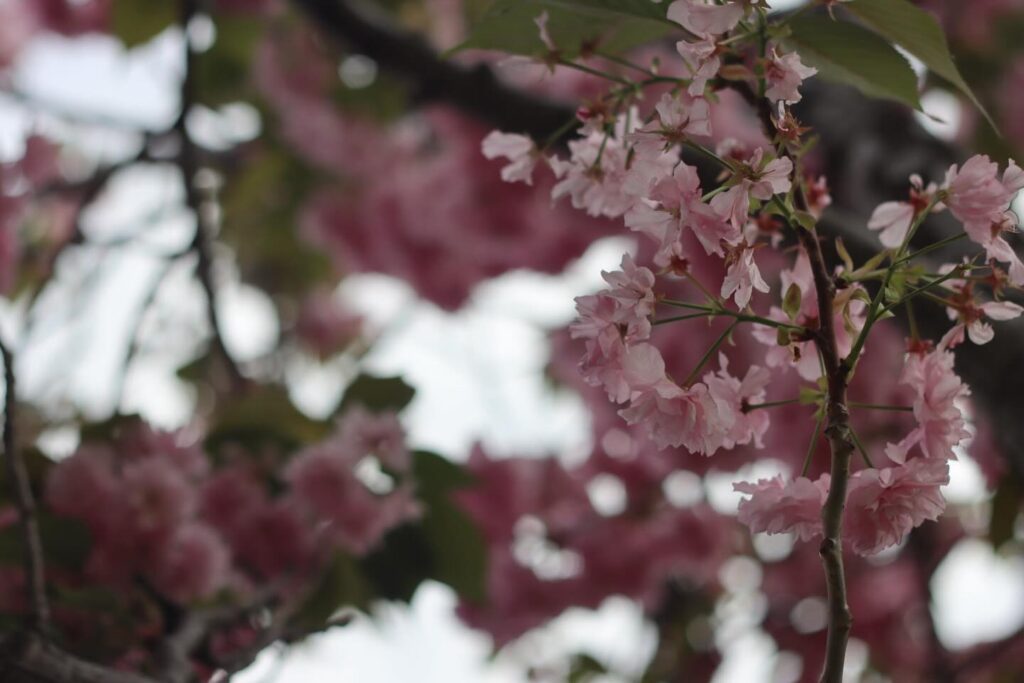
Quick flower photography tips
- Get low and shoot at eye level with the flower.
- Check the background for distracting stems, signs or people.
- Use a small spray bottle for a fresh, dewy look.
- Visit gardens on weekdays or early to avoid crowds.
- Shoot plenty of frames, as a light breeze can move petals.
The same techniques work beautifully for food and animals too. See my food photography tips and pet photography tips, or browse nature images in the gallery.
Frequently asked questions
What is the best light for flower photography?
Soft, even light from an overcast sky or early morning is ideal. Backlight is also beautiful for making petals glow.
How do I blur the background in flower photos?
Use a wide aperture, get close to the flower and keep the background as far away as possible. On a phone, portrait mode helps create the same effect.
Do I need a macro lens for flower photography?
Not necessarily. A macro lens helps for extreme close ups, but many beautiful flower photos are taken with standard or portrait lenses.
When is tulip season?
Tulips bloom in spring. In Australia that is generally around September and October, depending on the region and the weather.
Love florals in your portraits?
Garden and blossom season makes a gorgeous backdrop for portraits. Get in touch and we can plan a spring session.
Book a shootView the gallery